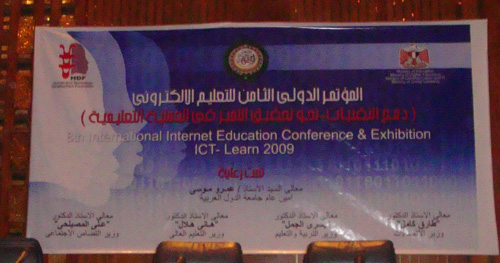
It was interesting of course that this conference – entitled the 8th international internet education conference and exhibition – ICT-Learn 2009, did not have any internet connection. There were delegations from Saudi Arabia, Sudan, Yemen and of course Egypt. It has many many shortcomings but it was refreshing to know that finally there is governmental interest in e-learning. Egypt still has a long way to go in e-learning and yet some initiatives were not bad at all. What I particularly disliked about the conference:
- some of the presentations were just about the presenter’s website – and that presenter believes that through the website he/she has contributed to e-learning. This would be true if it dealt with e-learning, not just another website that teenagers in the States or around the world would do.
- every single speaker began speaking with a verse from the Quran, including the moderators. Sometimes it was more than a verse. It was a bit surprising because all of a sudden it felt like it was a religious conference and not one on ICT. When did Egypt become so strange to me?
- no internet connection so one could not twitter nor blog about the conference, and no one had any laptop either.
- that this is the 8th conference and they were still trying to ‘define’ e-learning!
- that there were hardly any young people attending although it is the younger generations who will lead the way to new technologies. The few that were there were still confused and not sure what technology in education was really about
- as the 8th conference this should have been about practical matters and examples and not ‘cognitive’ theories and other theoretical stuff.
What I liked about it:
- it gave the opportunity to people to give presentations and show what they have done in their countries.
- just the very fact that some people are finally working on e-learning is wonderful.
In any case, here are my notes from the opening session:
July 15
Dr. Mohammed Al Azab: putting strategies and policies. We have researches from Libya, Sudan, Saudi Arabia, [around 100] and 40 were accepted. HDF provides training by Cisco also. The ministry of education and al tadamon al egtemai are the official sponsors of this conference. Prepping individuals for progress. Creating trained teachers and prepped students are the foundation for the future.
Dr. Faeka al Saleh : ?????? ?????? ????? ????? ????? ???????
Encouraging skills that they can recognize and distinguish between correct and incorrect information. Enhancing self-worth and self-confidence. Teaching/education has become primary on the agenda of the Arab League ever since Khartoum Summit. ????? ?????? ?? ?????? ?? ????? ???????
??? ??? ??? ??????? ?? ?????? ?????? ??? ??? ??? ???? ???????? ???????? ?? ??????? ?????????. ???? ?? ????? ???? ???????? ??? ???????? ???? ????????????? ???????? ???? ??? ???? ?????? ????????? ?????????? ?? ???????
Dr. Hoda Baraka: ?????? ???? ?????????
????? ??????? ?? ??????? ????????? ???? ?? ????? ???????. ?? ???? ????? ???????? ????? ??? ?????? ?? ??? ?????, ??????? ??????? ???? ????? ??? ???? ??? ??? ???? ????? ?????? ????. ???? ?? 10 ????? ?????? ???????? ???????? ???? ???? ????? ?????? ???? ??? ???????? ?????????. ??? ??? ?? ??????? ??????? ??? ???? ??????? ???????? ?? ???????? ?????. ??? ???? ????? ??? ????? ?????????? ?? ???????. ???? ?? ??????? ???? ??????? ???????? ????.
?????? ?? ????? ???? ?? ??????? ???? ????? ?? ictl
???????? ???????? ???????. ??? ???? ??? ??????? ??? ????? ???? ???? de facto

I- First Session: Prof. Ahmed El Sherbini
?? ???? ?????? ?? ?????????? ??? ???? ??? ????????? ??????? ????? ?? ????? ??? 2010
????? ????? ???? ??? ???? ???? ??? ???? ????? ???????? ???????? ?? ????? ?????? ????? ?????? ?? ????? ???? ??? ????? ????? ?? ???? ?????. ????? ???? ?????? ?????? ?????? ??????
Prof. Frederick Bez: [Visiting Professor, Nile University] – they funded 8 coalitions spending 60 million US$. He was cofounder of two of those coalitions. The idea of computers in education came early on to teach students to program. But by 1995 innovative work was being done such as simulations, games, etc. but nobody really knew how to put the revolution together. What will the computer do in order to replace the book? It was by putting the book in the computer. By 1998 I saw this approach was not panning out. It was not educationally helpful. Went to Maryland university college because they were the first to do a full program on distance learning. There were 1000,000 virtual students worldwide.
When I began working on the internet I found that we needed to change the way we think. Traditional classrooms are lectures. If you stream a lecture online students hate it, like TV and students did not like it because we are bad actors. In a live class students accept you as a human being. You don’t want to lecture on the internet. Secondly, you do have laptop connectivity in both the e-classroom and the traditional classroom but the change occurs in the second. Professors become course designers and not lecturers and that is better. Computer provides assignments, tests, grading and tutoring in online classes. But tests were not useful in this environment – assignments are.
Cognitive theory: when we use our mind we use it 4 days ways: we think, intuit, sense and feel. Thinking and intuition are mental in focus. Sensation is perception and experience and feelings is emotions. [Carl Jung]. Thinking is better for books, intuition is better in computer discovery. Computer is good for sensation for virtual experiences and simulations, and feelings are computers also – vicarious experience, drama.
A good textbook is essential to e-learning. Intuition is an associative process. Computers facilitate intuition. Relevant assignments outside of textbook are also essential. Computer capabilities of simulations, virtual environments, games, virtual discussions are all important.
Needed developments for e-learning systems:
- R & D of computer intelligent tutors
- New financial arrangements to reward faculty, not as lecturers but as learning managers
- New educational administrative structures for dcreating, delivering and accreditation on a global basis
- Education physical facilities need to be ready to provide effective socialization, be comp0loetnetary to the course.
Yaser al Dakroury : ???? ??????? ??????????? ???????
Egyptian e-learning university: case study: August 2008 was when university was founded.
e-Learning definition and concepts:
- The use of technology to create, deliver and facilitate learning any time anywhere
- Using technology means to asccess and amanage learning that supports and enhances the knowledge of an individual
- Studies suggest that e-learning is as effectife in classroom learning but teaches more efficiencies.
- Learning time can be reduced
- Experts agree that e-learning works best when blended with classroom learning.
The university will begin with Tanta, Assiut then move on to other 29 governorates. Beginning to work starting Fall semester. Vision is to lead e-technology and provide leadership in Egypt. There should be human resources development and e-learning in Egypt. We must have good use of technology making use of the infra-structure. Prices need to be affordable. There has to be a continuous progress movement – constant progress in technology.
The university will have 8 colleges: engineering and technology, political science and economics, language and translation, information technology. One research center was started related to technology to provide liaison between industry and university and solve problems. While developing the university we had several goals: expanding higher education in Egypt and providing e-learning without constraints of time and geography and affordability, through a group of learning centers so students could join whichever learning center they want. Campus lectures will be around 25% in order to accredit this certificate – through tutors and professors who have had intensive training. All courses are developed as self-paced courses. Those lectures could also be streamed. [this model is called the virtual classroom]. Students attend discussions and exercises through these virtual classes that support 25 students. There will be new administrative and technological jobs in those institutions. We did this based on former experiences of other universities. Some are there to manage and support the learning environment. The curriculum is developed as coursework and final exam. Coursework depends on teacher and activities submitted through internet to evaluate and provide feedback for students. The final questions have been developed in a package that the professor can choose from out of 500 questions that have been pre-prepared. Students will go to the learning center and be examined there with supervision. This is known as the data center or the heart of the center where students can communicate together – peer-to-peer learning.
The center of education and technology center : having a team that can develop content and learning resources and materials. Elu.edu.eg [teachers can log in any time and connect with students or submit evaluations and put final scores etc.] There will be some means of quality assurance in education.
Two programs will start: business administrative program and computer and information tech programs. Developed through Egyptian know-how. Will do a later adaptation of an Italian curriculum. We also began an MBA program and are dependent on a Parisian university. Every semester we will convert 3 or 4 courses in order to provide it remotely to our students.
Prof. Magdy Kasem: ?????? ??????? ??????? National authority for quality assurance and accreditation of education – established by presidential decree in 2007.
???? ?????? ????? ???? ??????? ?? ??? ?? ???? ??????? ???? ????????. ??? ???? ????????? ??? ?????? ?????? ???? ??
4000 ???. ????? ?????? ?? ????? ?????? ????? ???. ??? ??? ????? ??? ????? ?????? ?? ????? ????????. ???? ??????? ?? ??????? ??????? ????? ???? ???? ??????? ??????????. ????? ?????? ???????? ??? ??? ??????? ??? ??? ??????? ????? ?? ???????? ?? ???? ?? ?? ?? ???? ???????? ???????. ?????? ??? ?????? ?? ??????? ????????? ????? ????????? ????? ?????, ?????? ?????? ????????? ????????? ????. ????? ???? ?????? ??????? ??????? –?? ????? ?????? ???????? ??????? ?????? ?????? ???. ?? ??? ??? ?????? ??????? ?????? ?? ???? ????? ??? ???? ???? ?????? ??????? ?? ????? ??????? ?????? ???? ??????? ???????????. ?????? ?????? ????


 Google announced the impending release of its new OS called Google Chrome which is a natural extension of the Chrome web browser. It is due to be released in the second half of 2010. It is obviously a typically competitive move against Microsoft 7 which is due to be released sometime this year – after the resounding failure of Vista.