How interesting. I have not tried this, but I came across this in the USB Tools and Portable Programs blog. It is a Windows XP boot up through a USB drive and it is only 56MB! [Is this almost like a Linux live CD?]. Here is the link where you can download it and read more about it.
Author: mtadros
open source iso burner
InfraREcorder is a good open source iso image burner that you can download here: http://infrarecorder.sourceforge.net/?page_id=5
It is a free CD/DVD burning solution for Microsoft Windows. It offers a wide range of powerful features; all through an easy to use application interface and Windows Explorer integration.
new blow to net neutrality
So now the FCC [Federal Trade Commission] issued a report entitled Broadband Connectivity Competition Policy, concluding that net neutrality is not an important issue to protect.
To read the report, clikc here. [pdf]
free software foundation to campaign against Microsoft
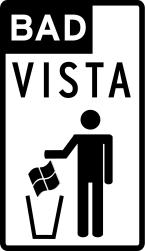 In response to Microsoft’s attack against free software, the FSF has announced on May 16th 2007 the creation of a campaign to fight back by organizing ‘public support into action on software freedom issues’:
The new team will be composed of two campaigns managers and an international group of volunteers, with one position to be filled by current staff member John Sullivan and the other by new appointee Joshua Gay. They will work together on the FSF campaigns BadVista.org and DefectiveByDesign.org, and launch additional campaigns in the near future. [link]
e-waste dumping in Africa
According to a UN report, an estimated 50 million tons of electronic waste generated globally every year, e-waste and its disposal is a growing problem, and much of it is dumped in Africa [link]. The Basel Convention on the Control of Transboundary Movements of Hazardous Wastes and their Disposal is a treaty on waste disposal entered into force in 1992 [link]. It is estimated that
anywhere between 25 to 75 percent of the e-waste that enters Africa, mostly through Mombasa, Lagos and Dar es Salaam ports, is useless.
It is also reported that in Nigeria alone, about 500 containers full of used electronic cargo pass through the Lagos port every month, according to a recent study by Seattle-based Basel Action Network.